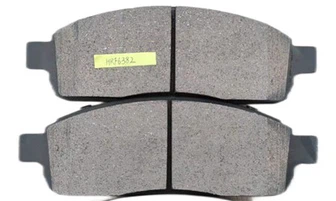
Brake Pad Factory Upgrades: Intelligent Manufacturing & Eco-Friendly Materials Drive Global Industry Growth in 2026
The global automotive brake pad industry is undergoing a profound structural transformation in 2026, with professional brake pad factories worldwide accelerating intelligent production upgrades and eco-friendly material iteration to adapt to stringent international emission standards and the booming new energy vehicle (NEV) market. Driven by Euro 7 emission regulations, global carbon neutrality goals and the rapid growth of the new energy aftermarket, traditional brake pad manufacturing is phasing out backward production modes and moving toward high-precision, low-carbon and high-performance industrial upgrading.
In response to the differentiated braking demands of new energy vehicles, mainstream brake pad factories have completed large-scale production line renovations this year. Unlike traditional fuel vehicles, NEVs feature heavier body weight, frequent regenerative braking and complex operating conditions, which put forward higher requirements for brake pads' thermal stability, wear resistance, low noise and low dust performance. Leading manufacturing bases have fully deployed automatic batching systems, high-temperature curing production lines and intelligent precision grinding equipment, realizing full-process digital control from formula matching to finished product inspection. This intelligent transformation effectively improves product consistency and yield rate, solving the pain points of unstable friction coefficient and easy thermal decay of traditional brake pads.
Eco-friendly material innovation has become the core competitive advantage of modern brake pad factories. With global regulatory authorities strictly restricting copper, lead and other heavy metal contents in friction materials, copper-free ceramic brake pads and low-metallic environmentally friendly brake pads have become the mainstream market trend in 2026. Industry data shows that the global market penetration of high-end eco-friendly brake pads has exceeded 42% in the first half of the year, with demand maintaining a year-on-year growth of over 18%. Professional factories continue to optimize ceramic fiber and composite friction formulas, successfully developing low-dust, silent and corrosion-resistant brake pad products that fully comply with EU environmental standards, perfectly matching the supporting needs of passenger cars, commercial vehicles and new energy models.

Green production construction has also been fully popularized in qualified brake pad factories. In addition to material upgrading, manufacturers have built complete dust recycling and waste gas treatment systems to achieve zero pollution discharge in the production process, realizing the integration of environmental protection production and efficient manufacturing. This standardized and green production model not only helps enterprises pass international environmental certification audits smoothly but also greatly enhances product competitiveness in European, South American and Southeast Asian overseas markets.
From the perspective of global market prospects, the automotive brake pad market size is expected to grow from USD 4.35 billion in 2025 to USD 4.57 billion in 2026, and will maintain a compound annual growth rate of 5.12% from 2026 to 2031. Industry analysts pointed out that with the continuous expansion of the global automobile ownership and the acceleration of NEV popularization, high-quality, compliant and intelligent customized brake pad products will become the main growth track of the aftermarket.
In the future, excellent brake pad factories will continue to focus on technological research and development and manufacturing upgrading, deeply layout new energy-specific brake pad solutions, rely on eco-friendly material advantages and intelligent production capabilities to further expand global market share, and inject continuous impetus into the high-quality development of the global automotive friction parts industry.